A final with several endings
Argentina and France drew 3–3 after extra time in the 2022 World Cup final. Messi scored twice; Kylian Mbappé answered with a hat-trick. Argentina then won the penalty shootout 4–2. Those facts provide the outline, but the drama lived in the repeated swings between apparent certainty and sudden doubt. A match that seemed to be moving toward one conclusion repeatedly found another.
Seven goals, one complete tournament
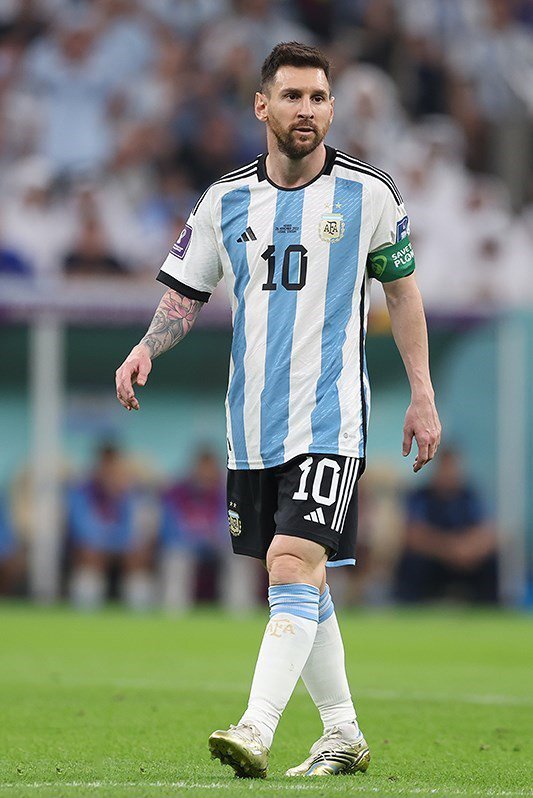
Messi finished Qatar 2022 with seven goals and won the tournament’s Golden Ball. That award recognizes the competition’s outstanding player; it is different from the Golden Boot, won by Mbappé as leading scorer. The distinction is useful because Messi’s contribution cannot be reduced to finishing. His influence included the timing of passes, the ability to draw opponents toward him, and the confidence he gave Argentina in the most demanding moments.
The captain and the collective
Argentina’s triumph belongs to an entire squad. Di María’s attacking contribution in the final, Martínez’s interventions, and the work of the midfield around Messi formed part of the same achievement. A great captain can provide an organizing point for a team, but teammates must turn that possibility into something durable. This is why the tournament is rewarding to revisit as a series of football problems solved together, rather than simply as the last missing line on an individual résumé.
A moment shared around the world
You did not have to be Argentine to understand what that trophy lift meant. Across time zones and continents, people had grown up watching Messi and wondering whether this day would come. When it finally did, the joy belonged first to Argentina, but the feeling travelled much further. That is part of football’s beauty. A match in one stadium can become a memory shared by people who will never meet. For millions, Lusail became one of those memories.
Read deeper.
FIFA · Qatar 2022 tournament review↗FIFA · Messi collects a second Golden Ball↗FIFA · Lionel Messi’s Argentina legacy↗Original editorial overview and analysis. External reporting remains with its publisher; historical sources reflect the date and scope of their publication.